

Upolu, Samoa

To Sua Ocean Trench

$25.00 (local currency) Bookmarked 23 times
To Sua Ocean Trench
Ocean Trench
Ocean Trench
Ocean Trench

Description

Dive into one of Samoa’s most breathtaking natural wonders at the To Sua Ocean Trench. This 30-metre-deep turquoise swimming hole, surrounded by lush greenery, is a must-visit on Upolu’s south coast. A wooden ladder leads you down into the crystal-clear water, where ropes help you navigate any gentle currents. Explore the surrounding gardens, peer into other sinkholes, and follow a coastal path to a traditional Samoan swimming pool for even more relaxation.

Highlights

  • Iconic 30-metre-deep turquoise swimming hole
  • Wooden ladder access with ropes for support
  • Scenic gardens and extra swimming spots nearby
  • 🏆 Rated #1 on Trip Advisor since 2013

Details

Activity Information
$25.00 (local currency)
Main South Coast Road, Lotofaga, Upolu
Monday: 8 am - 5 pm
Tuesday: 8 am - 5 pm
Wednesday: 8 am - 5 pm
Thursday: 8 am - 5 pm
Friday: 8 am - 5 pm
Saturday: 8 am - 5 pm
Sunday:  12:30 pm - 5 pm 

Family-owned business

Salati & Samuga P Fiame Salati & Samuga P Fiame
Natural AttractionsFree & Cheap Activities
Budget-FriendlyScenicRomanticAdventure
Loading map...

Video

How did To-Sua form?

How did To-Sua form?

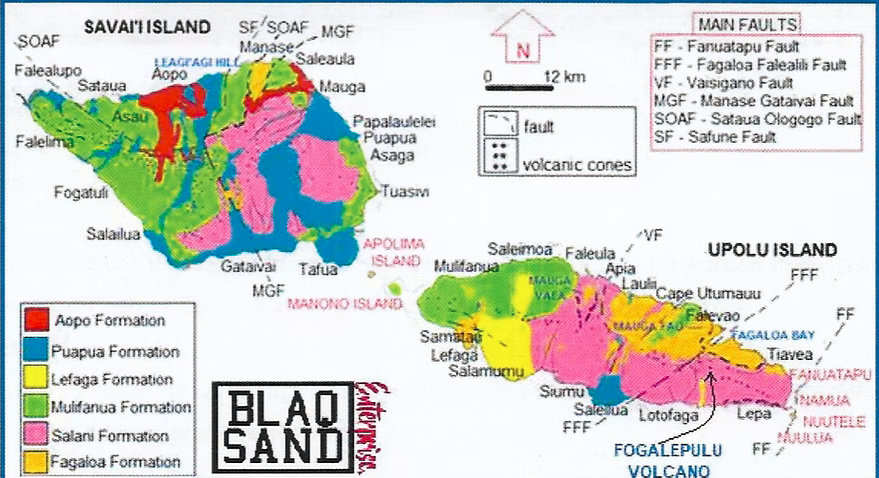
To-Sua and To-le-Sua possess some of the most common volcanic features that occur in the six rock formations of Samoa (Fig 1).
From oldest to youngest are termed: theFagaloa Volcanic Formation, the Salani Volcanic Formation, the Mulifanua Volcanic Formation, the Puapua Volcanic Formation, the Lefaga Volcanic Formation and the Aopo Volcanic Formation (click Figure1 )
The Fogalepulu Volcano Complex

The Fogalepulu Volcano Complex

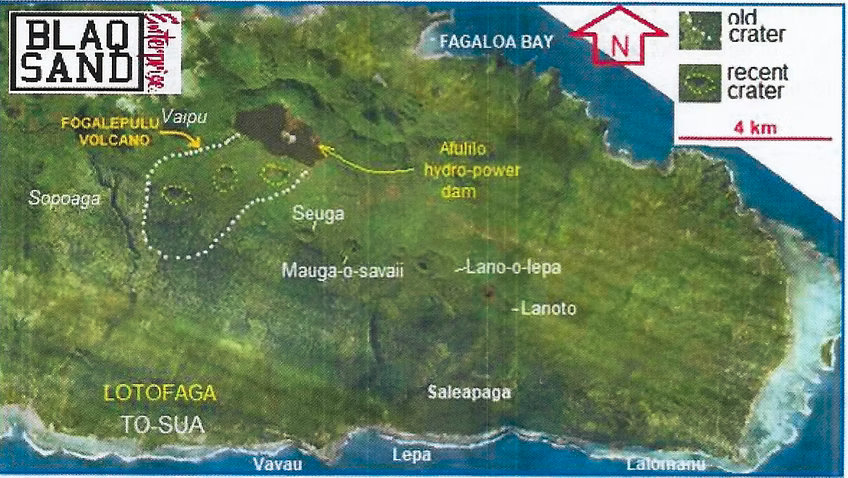
The Fogalepulu Volcano Complex is located to the northeast of Lotofaga village or to the southwest of Fagaloa Bay (Fig.1 and Fig.2). It is one of a major eruption centre that outpoured a great volume of lava of the Salani Volcanic Formation that covered a broad area between Falealili and Aleipata district including Lotofaga area (Fig. 1). This eruption activity believed it occurred for more than 3000 years ago. A high tectonic tension along the central part of Upolu caused the activity to be ceased.
How did To-Sua form?

How did To-Sua form?

The Fogalepulu Volcano’s old crater re-erupted due to more tectonic tension in the central easternmost part of Upolu during 1400 years ago (Fig. 2). This latest volcanic activity was part of Lefaga Volcanic Formation. Lava from this late activity of Fogalepulu Volcano Complex reached the sea throughlava tunnel (also known as lava tube) network that extended about 7 to 8 km approximately north to south direction.
Lava tunnel (Samoanaga”) is a natural conduit formed by flowing lava that moves beneath the hardened surface of a lava flow. As volcanic activity of Fogalepulu Volcano Complex became extinct, then lava flow ceased and the rock has cooled and left a long cave.
Lava Flow

Lava Flow

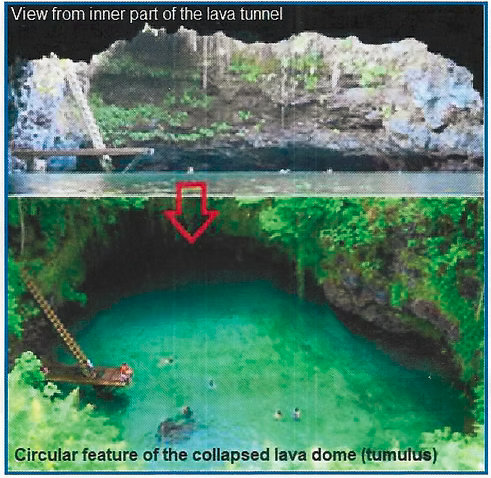
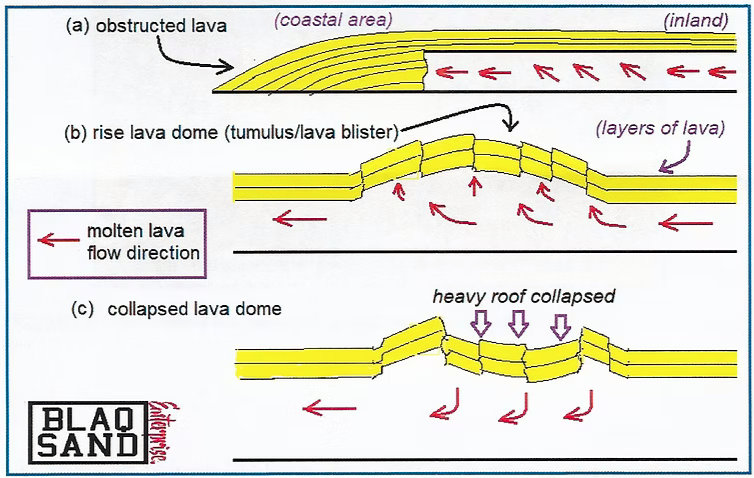
​During a lava flow activity of Fogalepulu Volcano Complex, To-Sua tunnel obstructed from a solidified lava pile up along the coast at the opening end of the tunnel (Fig. 3a). This causes the molten lava within the tunnel, to start pile up and generates a lava dome known as tumulus or lava blister (Fig. 3b). Tumulus is a dome-shaped structure, thought to result from flow beneath a solidified crust meeting an obstruction, causing the molten stream below the crust to push up the overlying crust and form a dome-like feature.
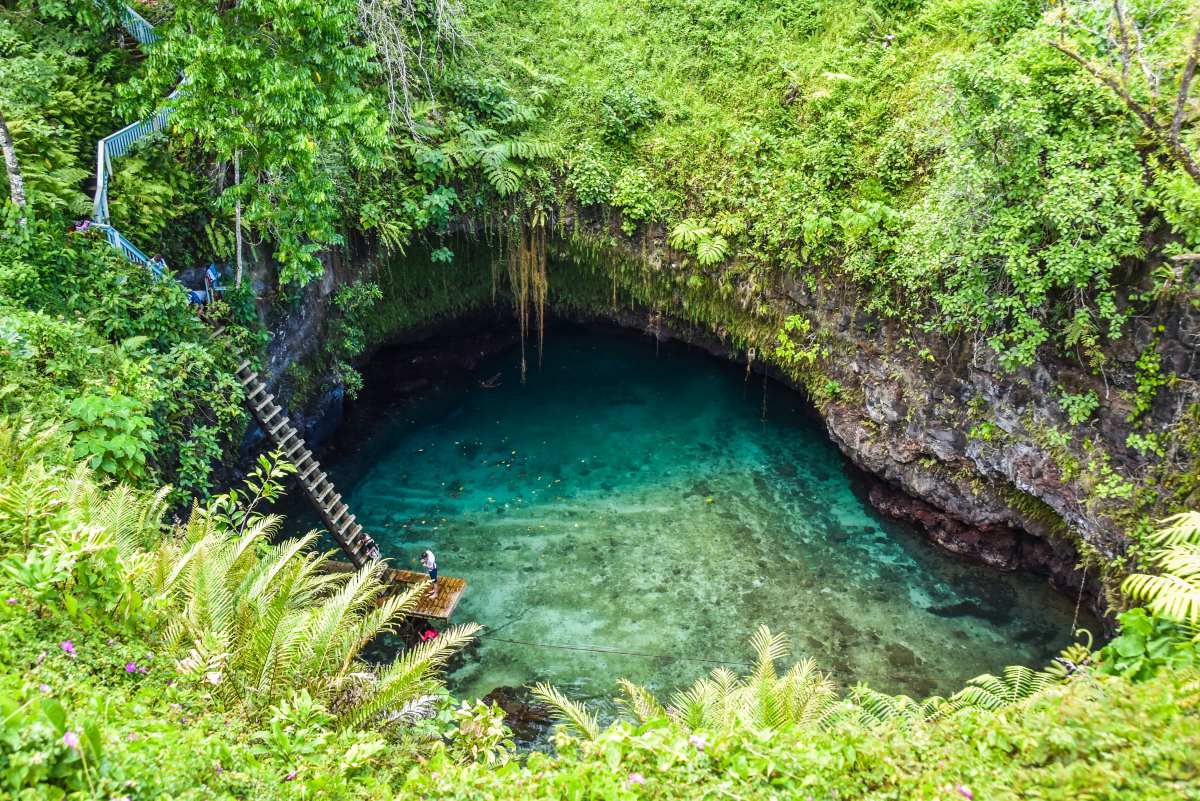
To-Sua lava dome could rise up to 60m high, before the roof cooled became heavy and collapsed (Fig. 3c). A lack of support for thick heavy roof, triggers the collapsed that generates a deep circular hole of up to 35m in diameter now known as To-Sua (Fig. 4), In Samoan the term “to” means deep hole and “sua” is referred to water (deep hole with water).
How did To-le-Sua form?

How did To-le-Sua form?

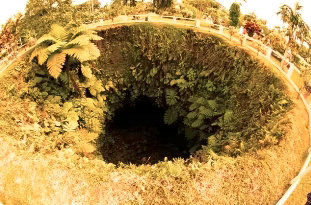
Like To-Sua, To-le-Sua lava tunnel formed from a very similar geological fashion, where lava flow obstructed the opening end caused the molten lava to rise (Fig. 3a and Fig. 3b). The lava dome could rise up at least 50m high, before it cooled (Fig. 3c). Lava dome roof got heavy and collapsed formed a circular depression of 15m in diameter, where now known as To-le-Sua (Fig. 5) In Samoan the term “To-le-Sua” means a deep hole without water. The collapsed material together with solidified lava,could block great amount of seawater and groundwater sources to enter To-le-Sua lava tunnel.